
 EN
EN
 ar
ar bg
bg hr
hr cs
cs da
da nl
nl fi
fi fr
fr de
de el
el hi
hi it
it ko
ko no
no pl
pl pt
pt ro
ro ru
ru es
es sv
sv tl
tl iw
iw id
id lv
lv lt
lt sr
sr sk
sk sl
sl uk
uk vi
vi et
et hu
hu th
th tr
tr fa
fa ms
ms hy
hy ka
ka ur
ur bn
bn mn
mn ta
ta kk
kk uz
uz ku
ku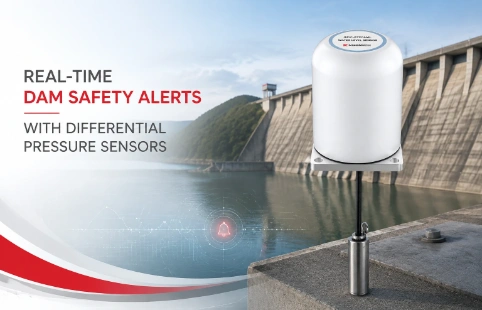
Real-Time Dam Safety Alerts with Differential Pressure Water Level Sensors
Key Takeaways An alert chain needs more than a sensor: define field in...

Cable Force Dynamic Tester for On-Site Cable Force Analysis
When a suspension bridge sways in the wind, the tension in its cables tells you a lot about structural health. Measuring that tension isn’t always straightforward—static methods miss the fluctuations that matter. That’s where a cable force dynamic tester comes in. Kingmach builds these testers to capture real-time force variations, helping engineers spot problems early. Unlike manual readings, dynamic testers log data continuously, making them practical for long-term monitoring on bridges, towers, and tension structures. Whether you’re dealing with stay cables or post-tensioned tendons, getting accurate force data can save on maintenance and prevent failures. Our instruments sit comfortably in the mid-range: they deliver professional-grade results without breaking your budget, and we can adapt them to specific project requirements when needed.
Technical Detail
Kingmach’s Cable Force Dynamic Tester uses the vibration frequency method to determine cable tension. A compact sensor attaches to the cable, picks up ambient or excited vibrations, and feeds the signal to a handheld unit that calculates force in real time. The system works on stay cables, suspender ropes, and ground anchors—common in bridge, tunnel, and dam projects. You get readings directly in kN or tons, with data logging that lets you track changes over hours or weeks. Because it’s dynamic, you see how tension fluctuates under traffic loads or temperature swings, not just a single snapshot. Built for field use, the tester runs on rechargeable batteries and stores enough records for a full day of inspections. We’ve kept the interface simple: on-screen graphs help you confirm stable readings, and USB export makes it easy to bring data into your analysis software. Kingmach has been making geotechnical instruments for years, so we understand the need for reliability and support. Our distribution network means you can get the tester and accessories quickly in most regions. For unusual cable types or monitoring requirements, we offer customization—modify sensor brackets, cable clamps, or analysis ranges. Workshops and phone support come standard; we’d rather you call us early than waste time on site. Looking at the bigger picture, this kind of dynamic tester fits into a broader monitoring setup. Pair it with our displacement sensors or weather stations, and you have a full picture of structural behavior. If you already have a monitoring system, we can make sure the outputs integrate cleanly. Prices depend on the configuration—single-channel or multi-channel, wired or wireless—so reach out with your project specs. We’ll help you match the tester to the cables and accuracy you need.
News
Key Takeaways An alert chain needs more than a sensor: define field in...
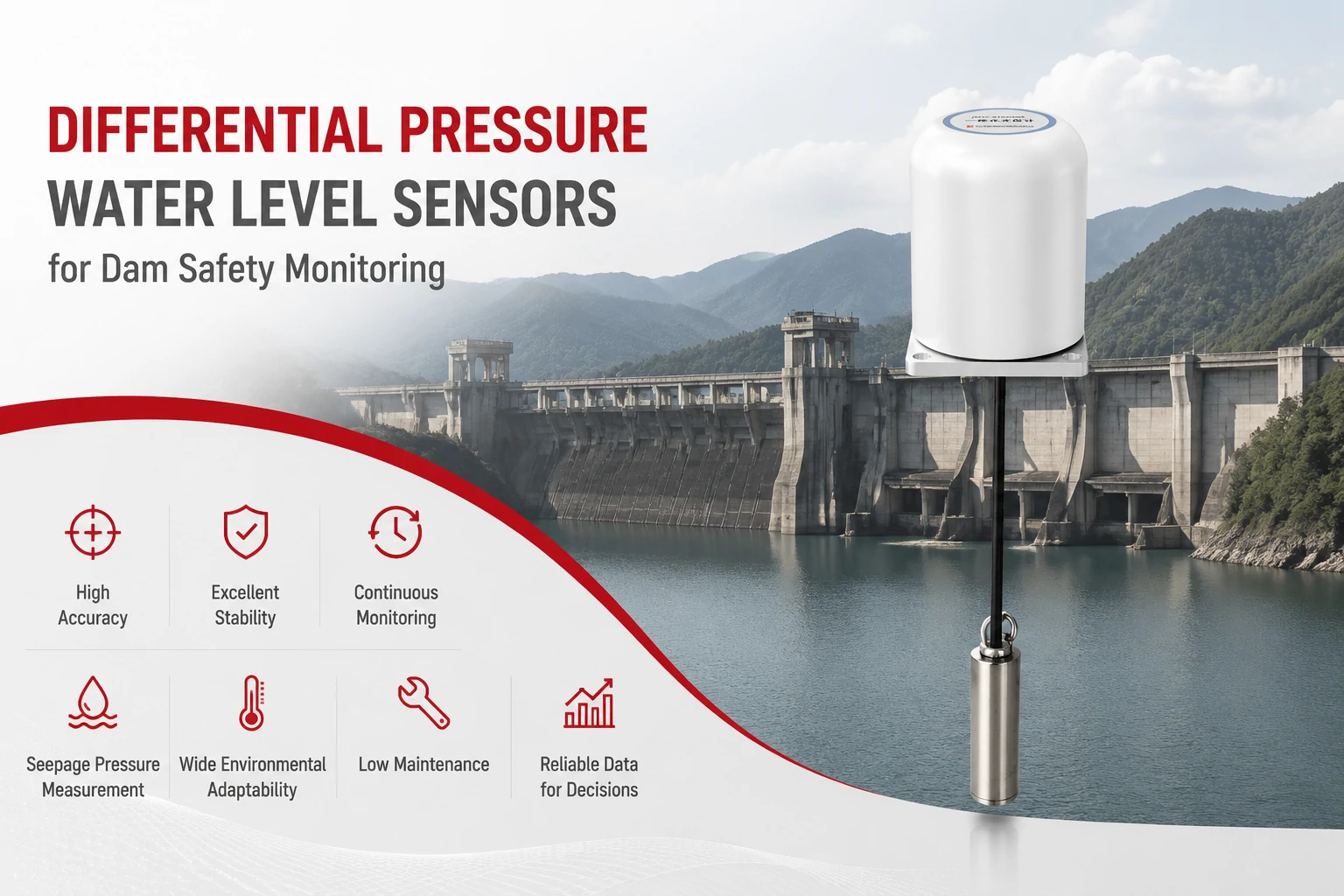
Key Takeaways The strongest fit is usually a confined, submerged, or s...
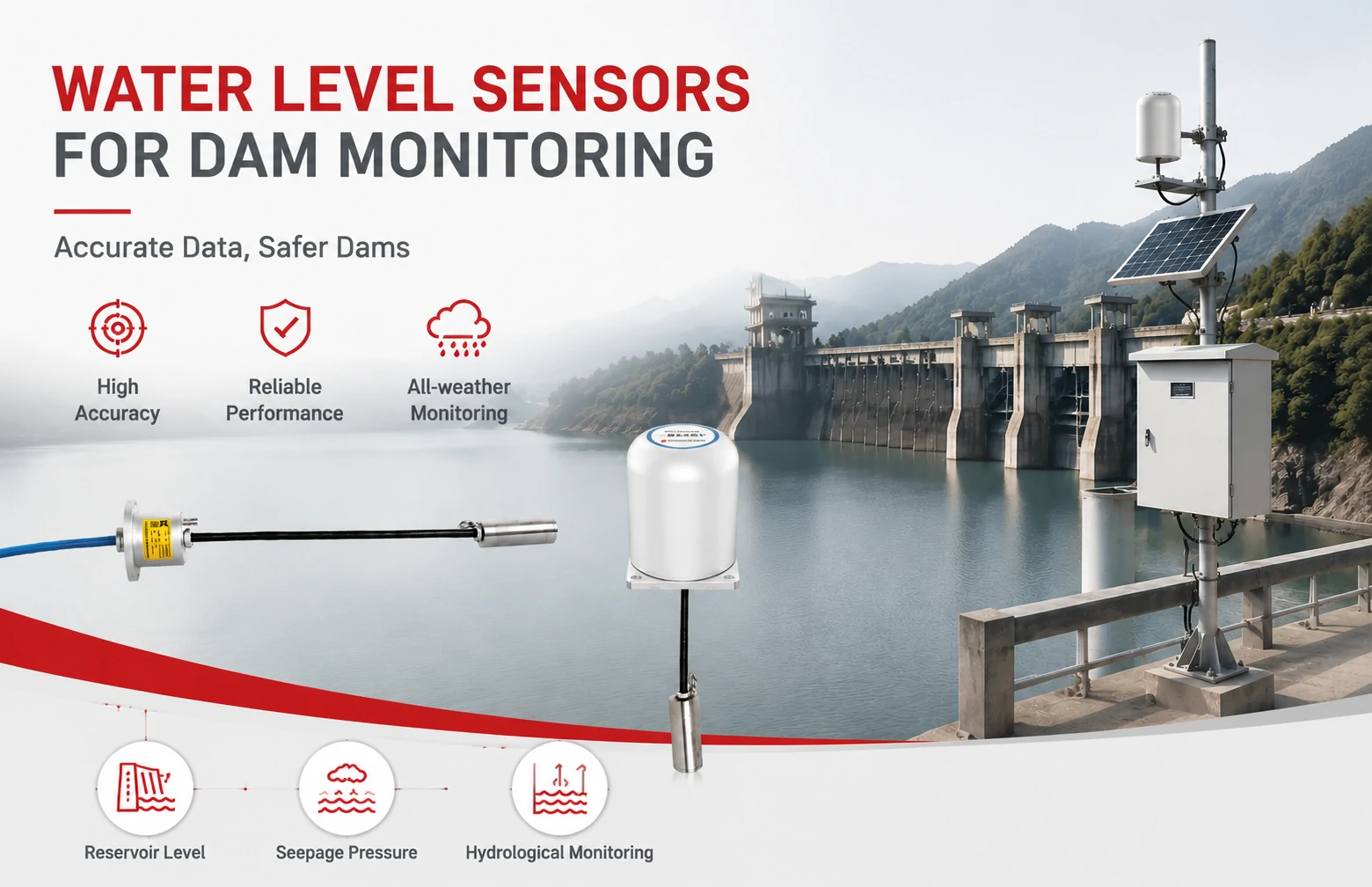
Kingmach Water Level Sensors for Dam Monitoring: A Buyer's Guide to Differential Pre...
Products
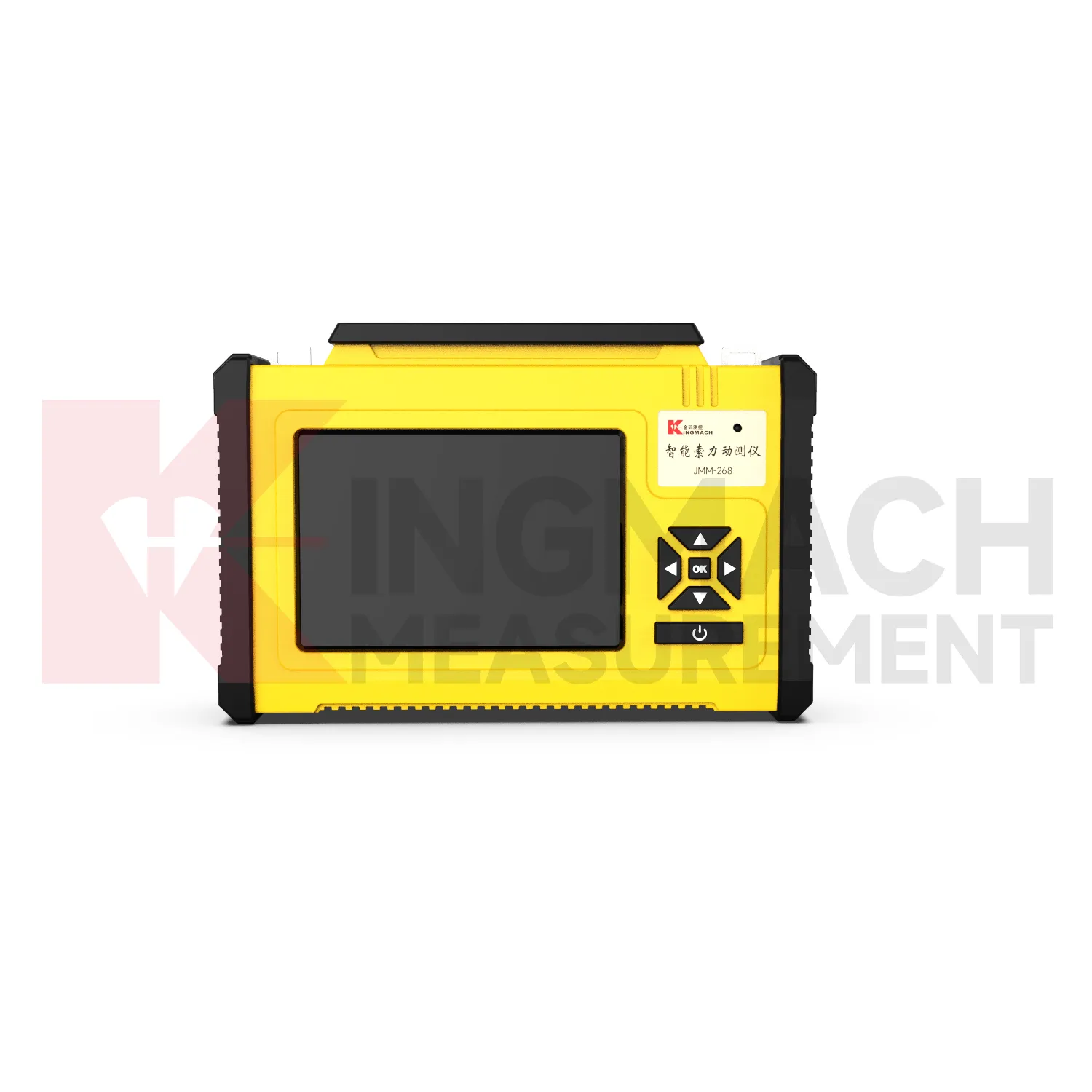
Cable force measuring instrument JMM-268L-1、2
View Details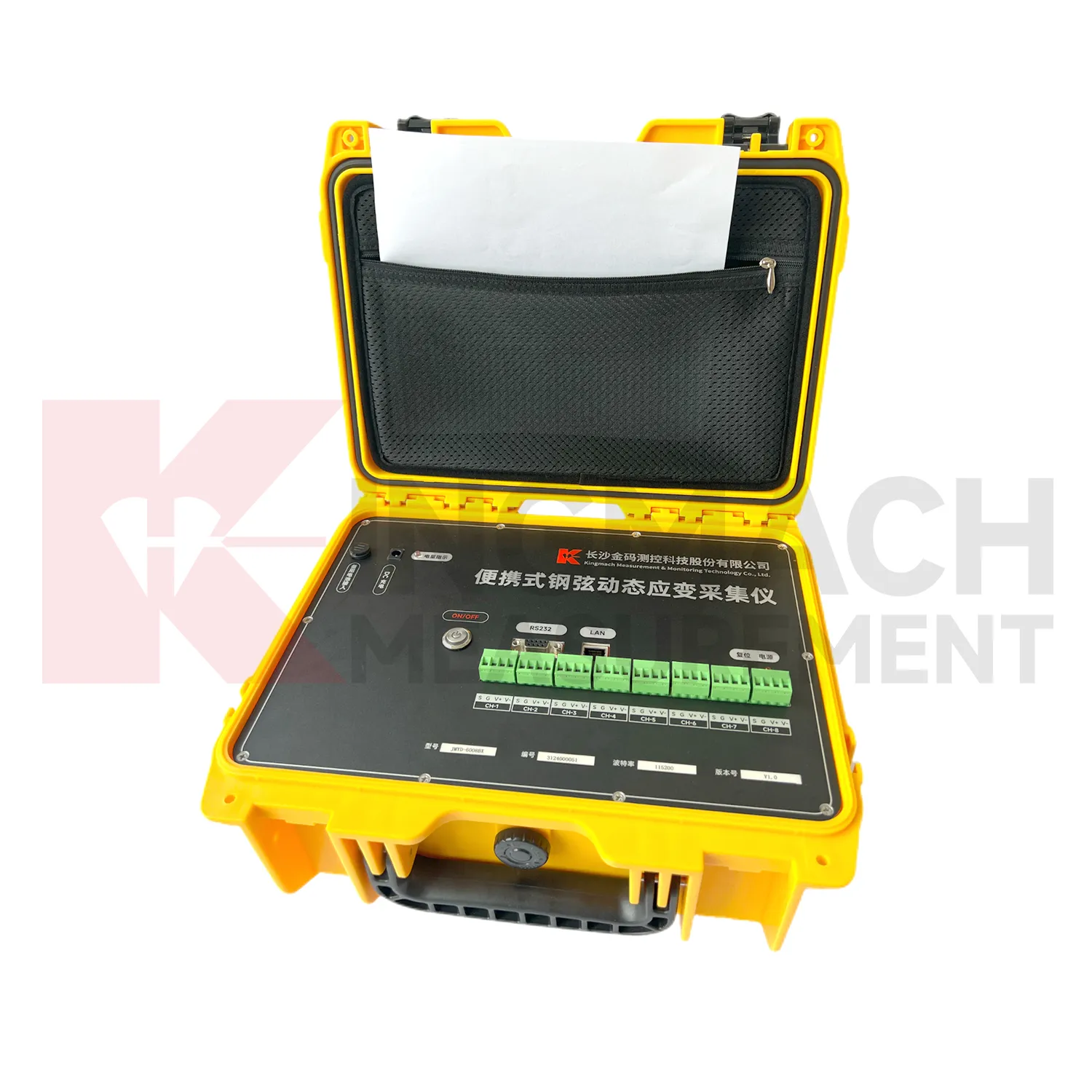
Portable Vibrating Wire Dynamic Strain Acquisition Readout JMYD-6008BX
View Details
FAQ
It comes down to how many cables you need to monitor at once and your budget. A single-channel unit is lighter and costs less, good for periodic spot checks. If you’re planning long-term monitoring on a bridge with multiple stay cables, a multi-channel tester lets you connect several sensors and scan all cables without switching. We can supply both and help you decide based on cable count and site logistics.
The main factors are cable boundary conditions, length, and mass per unit length. If the cable ends aren’t clearly fixed, the effective length changes, which throws off frequency-to-force conversion. Proper sensor placement matters too—mounting it near the middle of the cable gives cleaner vibration modes. Temperature variations can also shift the frequency, so our tester includes correction algorithms. We’ll guide you on-site setup to get consistent data.
Yes, it’s built to work with third-party systems. The tester outputs digital data via USB or, on models with wireless modules, through common IoT protocols like Modbus or MQTT. Our team can provide the communication specs so your integrator can pull readings into your existing dashboard. For simpler setups, CSV export is all you need.
It covers most steel cables you’ll find on infrastructure: parallel wire strands for cable-stayed bridges, locked coil cables, spiral strands, and even smaller tie rods or rock bolts in tunnels. You need to know the cable’s approximate length, mass per meter, and cross-sectional area to set up the calculation parameters. If you’re dealing with non-standard cables, we can customize the analysis software to match.
Every shipment includes a detailed manual and a quick-start guide. We also offer free video call training sessions to walk your team through the first use, from attaching sensors to interpreting frequency graphs. If something goes wrong in the field, you can reach our engineers directly for troubleshooting. We have local partners in several countries who can visit site if needed—ask about availability in your region.
Share your product type, target capacity, and application requirements. Our team can review the details and recommend a practical next step.
If you are interested in our products or want to become our partner.
Please leave your contact information, our team will contact you as soon as possible.
Mail: [email protected]
Contact Us: +8613808434127
Address: No. 188 Tongzipo West Rd, Changsha, Hunan, China